
THIS COFFEE COMES FROM CAT SH*T AND SELLS FOR MORE THAN GOLD
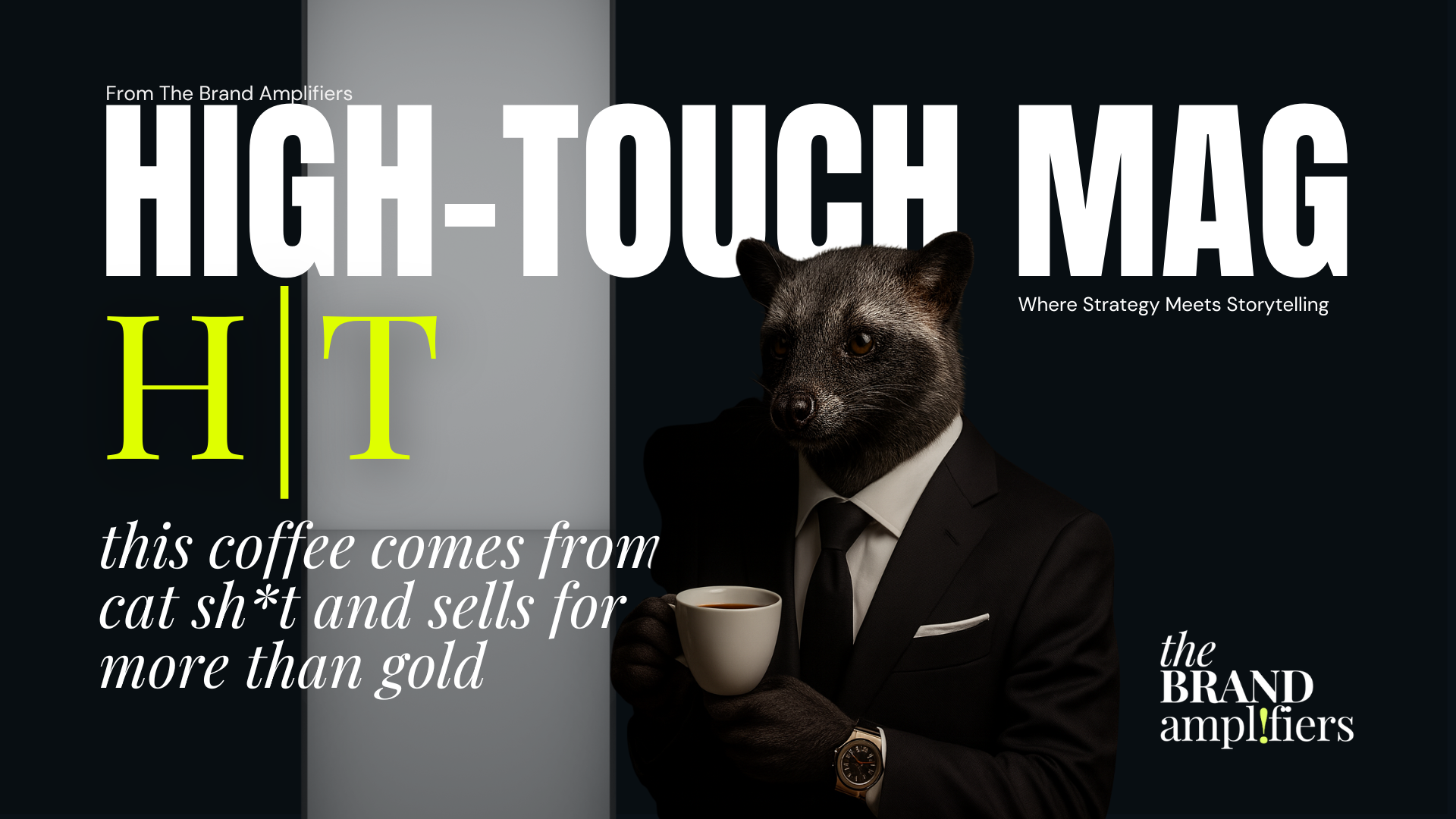
Because people aren’t sipping coffee. They’re sipping story.
in the indonesian jungle, a luxury story is born
Imagine paying $100 for a single cup of coffee brewed from beans that a wild animal plucked, swallowed, and later excreted on the jungle floor. It sounds outrageous, yet Kopi Luwak – often dubbed “civet coffee” – commands up to $600 per pound for wild-sourced beans. It’s known as the world’s most controversial coffee, and its price has little to do with superior taste or rarity of the bean itself. Instead, it has everything to do with the story and process behind it. In the rainforests of Indonesia, a small cat-like creature (the Asian palm civet) inadvertently creates a luxury product… without even trying. How? It’s not a machine or marketing gimmick at work – it’s pure instinct and nature’s alchemy.
This peculiar coffee’s origin reads like marketing mythology come to life. Back in the 18th century, Dutch colonial plantation owners in Java and Sumatra forbade local farmers from picking any coffee for themselves. Resourceful villagers noticed that wild civets feasted on the ripe coffee cherries, yet the beans inside passed through undigested.
The locals began gathering these civet droppings, cleaning and roasting the beans to brew their own coffee. The result? A surprisingly smooth brew with reduced bitterness, thanks to natural fermentation in the civet’s digestive tract. Word spread when even the Dutch planters tried this “jungle brew” and admitted it tasted better than the regular harvest. A luxury legend was born: Kopi Luwak, named from kopi (coffee) and luwak (the local name for the civet), the coffee that nature pre-processed in the belly of a wild animal.
from jungle floor to cup
The magic of Kopi Luwak lies in its extraordinary journey from cherry to cup. A wild civet, guided by instinct, selects only the ripest, sweetest coffee cherries as part of its nightly foraging. The civet eats these cherries, digesting the fruity pulp but excreting the inner beans intact. During the roughly 24 hours inside the animal, the beans undergo a form of natural fermentation: enzymes and stomach acids seep in, purportedly altering the beans’ chemical profile – lowering their bitterness and adding smooth, chocolatey notes once roasted. In essence, the humble civet performs a unique bio-processing step that coffee scientists and connoisseurs find intriguing (if a bit bizarre).
After the civet “deposits” the beans on the jungle floor, the real work for humans begins. For traditional kopi luwak producers, this means venturing into the forest at dawn, scouring the ground for scattered civet droppings. Each clump might contain a few coffee beans – and finding them is like panning for gold. The process is so labor-intensive and yield so scant that it directly fuels the coffee’s exclusivity.
In fact, one account notes that a forager on a good day may find only a handful – less than a dozen – of beans from wild civet. Those precious few beans are painstakingly collected, thoroughly washed, sun-dried, and then hand-roasted in small batches over an open fire. It’s not what the coffee is, but what it becomes through this journey: a humble bean transformed by animal instinct, refined by human care, and steeped in storytelling.
A coffee farmer in Bali displays the rare bounty: coffee beans gleaned from civet droppings in the Sumatran jungle. These partially digested beans must be cleaned, dried, and roasted by hand. Wild Kopi Luwak is extremely scarce – a lucky forager might gather only “a handful of less than a dozen beans” in a day, which is one reason it’s so prized.
The result of this arduous process is a coffee that’s often described as exceptionally smooth, with a muted acidity and rich mouthfeel. Fans claim they detect hints of caramel or chocolate, the civet’s fermentation having “taken the bitterness out.” But here’s the twist: the flavor alone can’t explain a price tag higher than many premium champagnes.
In blind taste tests, coffee experts often find Kopi Luwak unremarkable or even flat, noting that the digestive fermentation actually robs the beans of the acidity that gives coffee its complexity. In other words, objectively it’s not the world’s best-tasting coffee. So why are people paying a small fortune for it? The answer boils down to five powerful ingredients that have nothing to do with taste – and everything to do with story-driven value.
5 reasons this coffee costs more than gold (per ounce)
Let’s break down the alchemy that turns “pooped-out” coffee beans into liquid gold. Kopi Luwak’s astronomical price is a case study in how narrative and exclusivity create luxury. Five key factors set it apart:
Scarcity: By its very nature, authentic Kopi Luwak is extremely limited. Wild civets don’t mass-produce beans on command; humans must literally hunt for the droppings. One source estimates only 500–1,100 lbs of wild Kopi Luwak are produced per year, versus tens of thousands of pounds of ordinary coffee. This high demand, low supply dynamic drives prices into the stratosphere. Each pound is rare by default – especially if it’s genuinely wild-collected and not farmed or faked. (And yes, fake Kopi Luwak is a thing – unscrupulous dealers have mixed ordinary beans into the supply when demand outstripped what civets could realistically eat.)
Origin Story: The tale behind Kopi Luwak is irresistible. It’s coffee from the jungle, “refined” by a wild animal’s instinct. From its discovery by colonial-era villagers outsmarting their oppressors, to the image of a civet choosing only the finest berries under moonlight – the origin story itself adds immense cachet. Drinking it makes you part of that story. As one marketer quipped, they’re not just selling coffee, “they’re selling a legend in a cup.” An origin that involves nature’s mystique and a dash of taboo (yes, it comes from poop) is infinitely more intriguing than any marketing slogan a modern brand could invent.
Mystique and Novelty: Kopi Luwak carries an aura of mystery – a product of nature that conventional logic would deem undrinkable, yet is treasured by those “in the know.” This paradox (coffee from feces as a luxury) sparks curiosity and conversation. Buyers relish the novelty and bragging rights: “I tried the world’s most expensive, elusive coffee – guess how it’s made?” As wildlife researcher Neil D’Cruze explains, a huge part of the appeal is having “an interesting story to tell your friends” about this bizarre brew. In luxury marketing, mystique = money. The very controversy of its origin (Is it delicious or just hype? Ethical or cruel?) only fuels more interest and free press, keeping Kopi Luwak in the spotlight as a forbidden indulgence.
Cultural Status Symbol: Once Kopi Luwak gained worldwide attention (featured in travel shows, celebrated in the 2007 film The Bucket List, etc.), it became a pop culture icon for exotic luxury. It’s served in only select cafes or five-star resorts, sometimes presented by ceremonious pour-over methods to enhance the theater. In parts of Asia, it’s given as an extravagant gift. In the West, it’s a bucket-list experience for foodies. By positioning itself as the ultimate coffee rarity, Kopi Luwak earned a place alongside caviar, truffles, and vintage champagne as shorthand for “luxury indulgence.” In London, even Harrod’s department store has sold similar wild-sourced coffees to cater to curious elites. Owning or tasting this coffee confers a sense of status – it’s a story one wears, signifying adventurous, worldly taste.
Ethical Intrigue (and Purity): Interestingly, part of the modern luxury appeal is ensuring the coffee is ethically sourced and authentic. Because mass demand led to cruel civet factory-farms (civets caged and force-fed cherries) that produce inferior beans, true connoisseurs insist on wild-collected Kopi Luwak and are willing to pay even more for it. The ethical controversy – reports of animal cruelty in civet farms – has a dual effect: it tarnishes the coffee’s image and enhances its exclusivity. The only way to enjoy it with a clean conscience (and the best flavor) is to source from wild civets, which is even harder and costlier. In a counterintuitive way, the controversy feeds the narrative: the “real” Kopi Luwak is a labor of love and respect for nature, as opposed to a factory product. Savvy brands now emphasize wild, cruelty-free sourcing, adding a moral dimension to the luxury. That means the coffee isn’t just a drink – it’s an emblem of selectiveness and values (for those who ensure it’s ethically done). Luxury consumers love nothing more than a product with principles and a story behind it.
In short, Kopi Luwak’s value is 20% physical and 80% story. As a luxury case study, it proves that how a product comes to be – its journey, rarity, and narrative – can far outweigh what the product is in raw form. Or as one analysis succinctly put it: people don’t buy this coffee for taste; they buy it for the mystique of experiencing “one of the world’s rarest and most costly beverages.”
sipping on story: the emotional economics of luxury
Take away the wild origin and ethical intrigue, and Kopi Luwak would just be average coffee beans with a weird backstory. But add the narrative, and suddenly you’re not drinking coffee – you’re sipping a story. This is the essence of emotional branding: great luxuries make you feel something beyond the product. In an upscale café, when a customer orders a $100 cup of civet coffee, they aren’t merely seeking caffeine; they’re seeking wonder, prestige, and curiosity.
It’s the thrill of partaking in a rare ritual, of tasting the “forbidden,” and later regaling others with the tale. The beverage becomes almost theatrical – from the special brewing method to the reverent way it’s presented – all reinforcing that this is no ordinary coffee. As one expert observed, the premium price is largely for “the novelty factor, having an interesting story to tell your friends.” In other words, story scales emotion, even if the flavor itself might not wow a true coffee aficionado.
Crucially, the story also creates a perceived ROI for the buyer in terms of experience and identity. Psychologically, spending big on a small item makes sense when it delivers outsized emotional returns. A cup of Kopi Luwak offers the taste of exclusivity and a chance to satisfy deep curiosities (“What does coffee processed by a civet taste like?”). It allows the drinker to momentarily inhabit a narrative of luxury adventure. In marketing terms, it’s transformational: you feel a bit like an explorer or connoisseur, elevated above the everyday. That feeling is the true product being sold. As branding aficionados like to say, luxury consumers “aren’t buying a product, they’re buying a ticket to a story.” And stories, unlike commodities, can justify virtually any price if they resonate.
In the broader luxury market, this phenomenon is everywhere: we pay more for a watch with a heritage story, a handbag made by an iconic atelier, or a wine from a historic vineyard because it heightens our emotional connection. Kopi Luwak just takes it to an extreme, underlining the principle that narrative = value. Even the fact that experts often deem the coffee mediocre hasn’t dented its allure. Why? Because the perception of rarity and the bragging rights of the story outweigh objective qualities.
The experience and conversation around the product become the true payoff. In economic terms, Kopi Luwak teaches us that people will pay for intangible assets – mystery, status, delight, curiosity – embedded in a product’s story. That’s the ROI of narrative: a humble bean, worth pennies on its own, becomes a luxury experience worth its weight in gold once it’s wrapped in meaning and mythology.
from wild coffee to your brand: crafting story-driven luxury
The tale of civet coffee is fascinating on its own, but it’s more than a quirky footnote in gourmet history. For premium brand owners across industries, Kopi Luwak is a masterclass in turning a product into an emotionally charged experience. The good news is you don’t need a wild animal or a jungle to do it. The real lesson is that luxury is not a price point – it’s a story well told. Your product or service may be exceptional, but will anyone feel its exceptionalism if you don’t communicate a story around it? Here are some strategic takeaways to create your own “Kopi Luwak moment” for your brand:
Identify Your “Origin Story” or Unique Process: Dig into your brand’s roots or creation process to find elements that are unique, authentic, and intriguing. Maybe it’s the inspiration behind your design, a painstaking artisanal method, or materials sourced from an unusual place. Highlight the journey of how your offering comes to life. Every luxury product needs an origin myth. Kopi Luwak’s origin – discovered by villagers, forged by nature – gives it an air of inevitability and folklore. What’s the narrative spark that makes your brand one-of-a-kind?
Embrace Scarcity (Genuinely): If something is widely available, it’s not perceived as luxurious. Consider how you can introduce real exclusivity into your business model. This could mean limited editions, bespoke options, or small-batch production that ensures quality. Scarcity must be authentic to work – like the naturally limited supply of wild civet coffee. Find the sweet spot where demand outstrips supply just enough to make your clients feel lucky to have it. Then communicate that rarity (e.g., “only 100 made,” or “crafted by a single master artisan over 6 months”). Scarcity creates urgency and value through FOMO – fear of missing out on something special.
Build Mystique and Ritual: Don’t reveal everything at once. Create an aura around your product with tantalizing details and sensory experiences. Perhaps there’s a ritual in how it’s delivered or used – play that up. Kopi Luwak’s mystique was amplified by being semi-hidden in jungles and then by the elaborate way one must brew and serve it (often via special percolators or tableside presentations). Think about how you can add a sense of ceremony or discovery to your customer’s interaction with your brand. This might be through storytelling in your packaging, a guided unboxing experience, or members-only events. Intrigue pulls people deeper, converting mere customers into avid fans.
Sell the Emotion, Not just the Product: Identify the core emotions your high-end client seeks – be it prestige, adventure, comfort, or innovation – and craft your brand story to deliver that. Remember, products don’t scale emotions, stories do. A luxury home is not just square footage; it’s the promise of a lifestyle of elegance (see our next article on luxury homes as lifestyle brands). A high-ticket consulting service isn’t just expertise; it’s the feeling of empowerment and status the client gets. Kopi Luwak drinkers aren’t buying better caffeine; they’re buying curiosity and bragging rights. So ask: What emotional story does my brand let customers tell about themselves? Frame your messaging to reinforce that narrative at every touchpoint.
Stay Authentic and Ethical: Today’s premium consumers are savvy. They’ll sniff out inauthentic stories or unethical practices quickly – and that can implode your brand trust. One lesson from Kopi Luwak is that when the story is the product, you must fiercely guard its integrity. The civet coffee industry learned this the hard way: cruelty and fakes nearly killed its mystique, prompting a renewed focus on authentic wild sourcing. For your brand, this means living up to your story. Don’t claim “handcrafted” or “sustainable” unless you truly are and can prove it. Align your luxury narrative with real values and quality control. Authenticity isn’t just a moral stance; it’s a luxury feature in itself. When your story is honest and values-driven, customers feel good buying into it – and that feeling is priceless.
In implementing these strategies, consider how your brand’s narrative can add value beyond the functional benefits. The goal is to elevate your product into an experience or status symbol that people desire not just for what it does, but for what it means. Luxury branding is an exercise in storytelling – in sculpting perception so that your offering stands for something bigger in the hearts and minds of your audience.
luxury is a story, not a price tag
The curious case of Kopi Luwak teaches us that luxury isn’t created in a factory – it’s created in the imagination. A $5 bean becomes a $50 cup when it’s infused with meaning, adventure, and exclusivity. In your business, you have the opportunity to do the same alchemy (thankfully, without involving animal digestion!). Craft a narrative around your brand that resonates deeply: educate your market on the painstaking process, share the heritage or vision, and create touchpoints that make your customers feel part of an exclusive story. When you do that, you stop competing on features or price – you’re playing an entirely different game, one of perceived value and emotional connection.
Your product may be exceptional on its own, but the prestige, wonder, and curiosity you build around it are what truly justify a high-ticket price and inspire loyalty. After all, anyone can sell a commodity, but only a brand with a story can sell a legend. Luxury is not a price point. It’s a story well told. Make yours one that your customers can’t wait to experience – and more importantly, to share with others as their own personal badge of honor.
Ready to script an unforgettable narrative for your brand? Start by examining the journey of your product and the emotions you want to evoke – and remember Kopi Luwak’s lesson that the process can be more valuable than the product itself. By turning your offering into a story worth sipping, you amplify its desirability far beyond any feature list or spec sheet.
Next Read: If you found inspiration in how story elevates a mere bean to a luxury, check out our follow-up article –From Property to Power Move: How Luxury Homes Are Becoming Lifestyle Brands. Learn how real estate developers are using narrative and exclusivity to transform high-end homes into aspirational experiences and status symbols. Just like Kopi Luwak, it’s another case study in the power of story-driven value.
FAQ
How does the story behind a product impact its value?
Story turns commodities into icons. Kopi Luwak proves that people don’t buy for taste alone — they buy for the mystique and narrative. If your brand lacks a story, your product risks being overlooked no matter how good it is.
What does Kopi Luwak teach about exclusivity in branding?
Exclusivity isn’t created by price tags — it’s created by scarcity and selectivity. Just like the civet only chooses the best cherries, your brand should be intentional about who and what it aligns with. That selectivity builds prestige.
Why do people pay more for story-driven products?
Because story scales emotion. Consumers justify spending when the experience delivers curiosity, identity, or bragging rights. The story becomes the ROI, not the object itself.
What questions should a premium brand ask after hearing this story?
Does our origin story create intrigue?
Are we selling an experience or just a product?
What rituals or exclusivities make us worth talking about?
Do our customers feel elevated when they engage with us?
How can my brand create its own ‘Kopi Luwak moment’?
By identifying and amplifying the aspects of your process, heritage, or experience that make you rare. Every premium brand has a “wild civet” moment — the element that makes your story unforgettable if told the right way.
What’s the risk of not building a strong brand story?
Without a compelling story, even great products get reduced to price comparisons. Storytelling protects your value by making you irreplaceable. Without it, you’re just another option on the shelf.
Is luxury about the product or the perception?
Luxury is 20% product, 80% story. The perception of rarity, prestige, and identity is what people truly buy. Kopi Luwak shows that even a polarizing product can become premium if the narrative is strong.
Citations
$1,500 for 'naturally refined' coffee? Here's what that phrase really means. | National Geographic
The Very Interesting History of Kopi Luwak: Coffee Made by Civets
The Kopi Luwak: its history, its rarity and its lack of ethics – Coffee Geek
Bali 003 - Ubud - famous lukaw coffee.jpg - Wikimedia Commons
Bali 003 - Ubud - famous lukaw coffee.jpg - Wikimedia Commons
The Very Interesting History of Kopi Luwak: Coffee Made by Civets
Understanding The Price Of Kopi Luwak - Pure Kopi Luwak
$1,500 for 'naturally refined' coffee? Here's what that phrase really means. | National Geographic
$1,500 for 'naturally refined' coffee? Here's what that phrase really means. | National Geographic
Understanding The Price Of Kopi Luwak - Pure Kopi Luwak
$1,500 for 'naturally refined' coffee? Here's what that phrase really means. | National Geographic
$1,500 for 'naturally refined' coffee? Here's what that phrase really means. | National Geographic
Understanding The Price Of Kopi Luwak - Pure Kopi Luwak
The Very Interesting History of Kopi Luwak: Coffee Made by Civets
Understanding The Price Of Kopi Luwak - Pure Kopi Luwak
File:Luwak Coffee Display In An Upscale Coffee Shop.jpg - Wikimedia Commons
